Calm an Anxious Dog: What Works
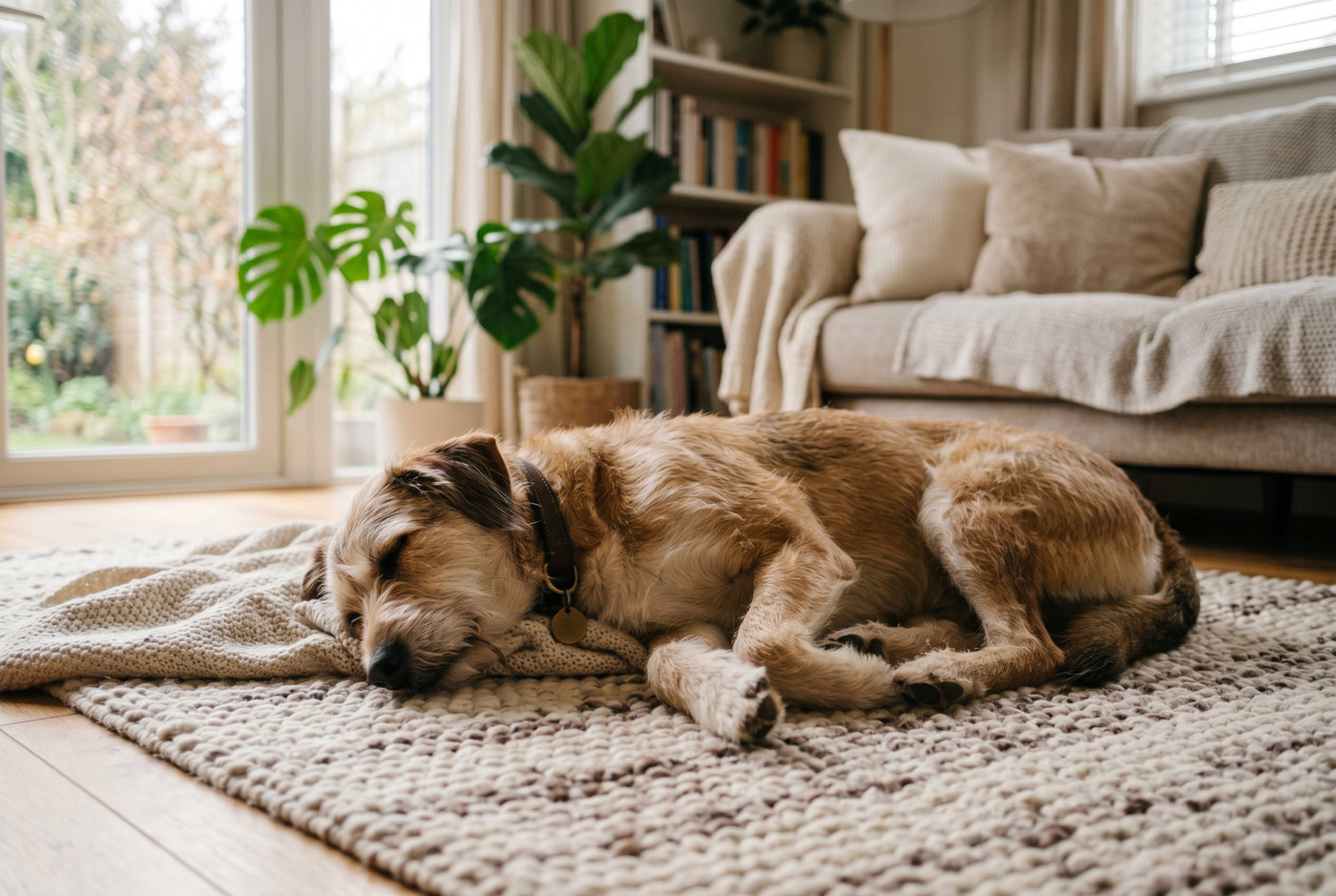
A practical, calm plan that helps most anxious dogs settle, plus the mistakes that quietly make it worse.
An anxious dog is not being difficult. Anxiety is a stress response, and once you see it that way the path forward gets a lot clearer. Most dogs settle with a steady routine, the right outlet for their energy, and a place that feels safe. Here is a plan you can actually follow.
Know what you are looking at
Anxiety shows up in the body before it shows up in behavior. Common signs include pacing, panting when it is not hot, drooling, trembling, whining, hiding, clingy shadowing, destructive chewing when left alone, or accidents from a house trained dog. Noticing the early signals lets you step in before a dog tips into a full panic.
Find the trigger
Most anxiety traces back to a handful of causes: being left alone, loud noises like thunder and fireworks, unfamiliar people or dogs, a change in routine or home, or a rough past for a rescue. You do not have to solve the root cause overnight, but naming the trigger tells you where to aim.
What actually helps
Build a predictable routine. Dogs relax when the day is readable. Feed, walk, and wind down at roughly the same times. Predictability is calming on its own.
Drain the energy first. A surprising amount of anxious behavior is unspent energy with nowhere to go. Daily walks, play, and a little sniff time outdoors take the edge off. A tired dog is a calmer dog.
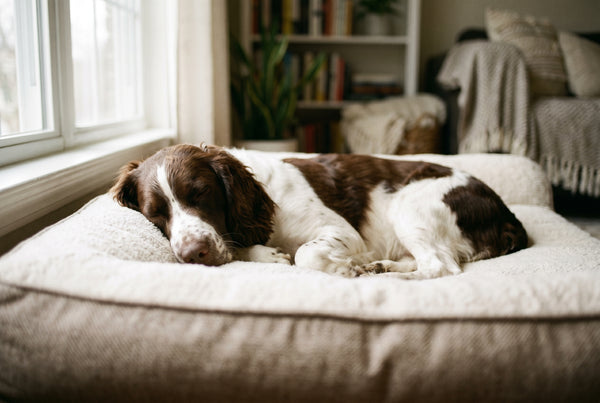
Give them a den. Dogs are den animals, and a defined safe space helps them self soothe. A supportive, enclosed or bolstered bed in a quiet corner gives an anxious dog somewhere to retreat when the house gets busy or loud. Let it be their spot, never a place of punishment.
Add enrichment. Puzzle feeders, chews, and lick mats give a worried brain a job. Mental work tires a dog in a way that also settles them.
Desensitize slowly. For a specific fear, expose your dog to a mild version of the trigger while something good happens, then build up gradually. For departure anxiety, practice short absences that end before your dog gets upset, and stretch them out over days.
Keep your own energy calm. Dogs read us closely. Big emotional hellos and goodbyes teach a dog that departures are a big deal. Keep comings and goings low key and matter of fact.
What to avoid
Do not punish anxious behavior. Scolding a frightened dog adds fear to fear and usually makes the problem worse. Avoid flooding, which means forcing a dog to face a big scary trigger all at once in the hope they get over it. That tends to deepen the fear, not cure it.
When to bring in help
If your dog cannot be left alone at all, hurts themselves trying to escape, or the anxiety is getting worse despite your best efforts, talk to your vet or a certified behaviorist. Sometimes there is a medical piece, and sometimes a short term plan from a professional makes everything else work better. There is no shame in it. You are advocating for a family member who cannot ask for help.
If a calm retreat is the missing piece, our beds and furniture include supportive, cozy options made for dogs who need somewhere to feel safe.
More from Wrenwood Notes
Join the Pack
Get 10% off your first order, plus care tips and early access to new arrivals.
Get 10% off