Leash Training in 7 Days
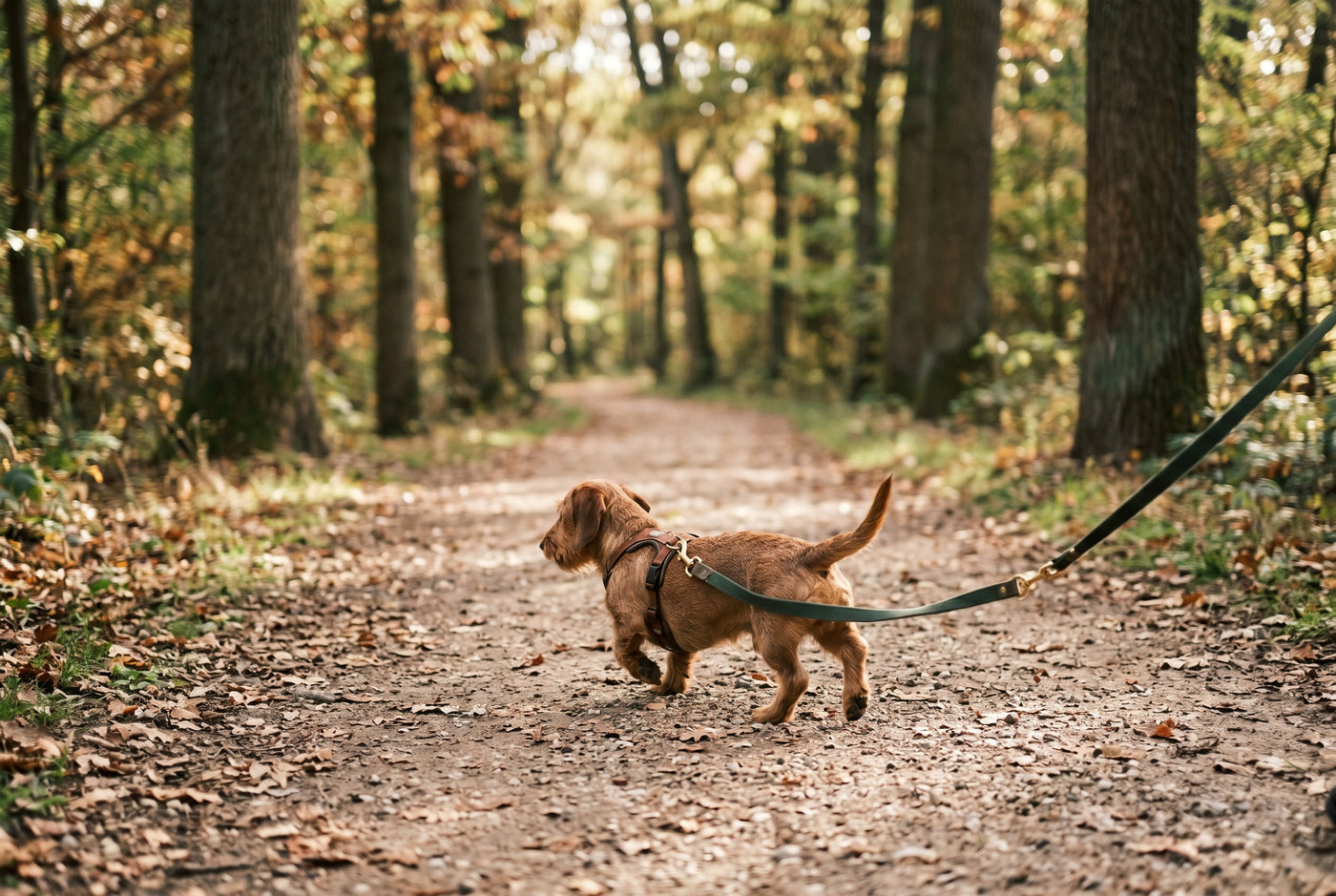
A gentle, day-by-day plan for loose-leash walking, plus how to fix pulling without a fight.
A calm walk is a skill, not a personality trait, which means almost any dog can learn it. The plan below moves in small daily steps. Keep sessions short and upbeat, five to ten minutes at a time, and reward often. Patience beats pressure every time.
Start with the right gear
A well fitted harness gives you gentle control without putting pressure on a dog's throat, which is safer and calmer than a collar for training. A front clip or no-pull style harness is especially helpful for a dog that leans into a leash, because it turns them back toward you instead of letting them tow. Add a standard six foot leash, not a retractable one, and a pouch of small treats.
Day 1 and 2: get comfortable indoors
Let your dog wear the harness and leash around the house so it feels normal. Reward calm behavior. Practice getting your dog's attention with their name and a treat the moment they look at you. You are teaching the single most useful walking skill: check in with me.
Day 3: reward the right position
Still indoors or in the yard, walk a few steps. Whenever your dog is beside you with a loose leash, mark it with a word like yes and give a treat. You are showing them that staying near you is what pays.
Day 4: add the outdoors, quietly
Step into a calm, low distraction spot like your driveway or a quiet stretch of sidewalk. Expect your dog to be more interested in the world than in you at first. Keep rewarding loose-leash moments and name check ins. Short and successful beats long and frustrating.
Day 5: handle distractions
Now practice near mild distractions, another person at a distance, a smell, a parked car. When your dog notices something and then looks back at you, reward it generously. That glance back is gold, and you want to build a lot of it.
Day 6: a real, short walk
Take a proper walk around the block, but keep your standards from the week. If the leash goes tight, the stop technique below kicks in. Let your dog sniff as a reward for good walking. Sniffing is how dogs read the world, and built in sniff breaks make them easier to walk.
Day 7: proof it
Repeat the block walk and start asking for a little more calm before you reward. Vary your route so the skill sticks in new places. From here it is just practice.
How to fix pulling
Use the stop and go method. The moment the leash goes tight, stop walking and stand still like a tree. Do not yank back. When your dog eases the tension and the leash goes slack, start walking again. Pulling now means the walk pauses, and slack means the walk continues. Most dogs work this out within a few sessions. For a dog that lunges toward other dogs or people, add distance so they stay under threshold, and reward calm looks before they react.
If you need the gear to start, our collars and harnesses include no-pull options that make week one a lot smoother.
More from Wrenwood Notes
Join the Pack
Get 10% off your first order, plus care tips and early access to new arrivals.
Get 10% off