Why Your Cat Won't Drink, and the Easy Fix
Cats are wired to under-drink. Here is why it happens, why it matters, and the simple changes that get them hydrated.
If your cat barely touches the water bowl, you are not doing anything wrong. Cats are simply built to under-drink. Their ancestors were desert animals that got most of their moisture from prey, so the thirst drive that keeps humans and dogs reaching for water is much weaker in a cat. The good news is that a few small changes usually fix it, and most of them cost nothing.
Why hydration matters more than people think
Water does the quiet work of keeping a cat healthy. It supports kidney function, helps flush the urinary tract, aids digestion, and keeps energy steady. Chronic low intake is linked to two of the most common problems vets see in cats: urinary tract issues and kidney strain later in life. A cat that drinks a little more every day is a cat that is easier to keep well.
Signs your cat may be running dry
You do not need to measure ounces to spot trouble. Watch for these:
- Skin that is slow to spring back when you gently lift it at the scruff
- Tacky or dry gums instead of slick and wet
- Small, hard stools or less frequent litter box trips
- Low energy, a dull coat, or sunken looking eyes
If you see several of these at once, treat it as a reason to call your vet rather than wait it out.
The easy fixes, in order of impact
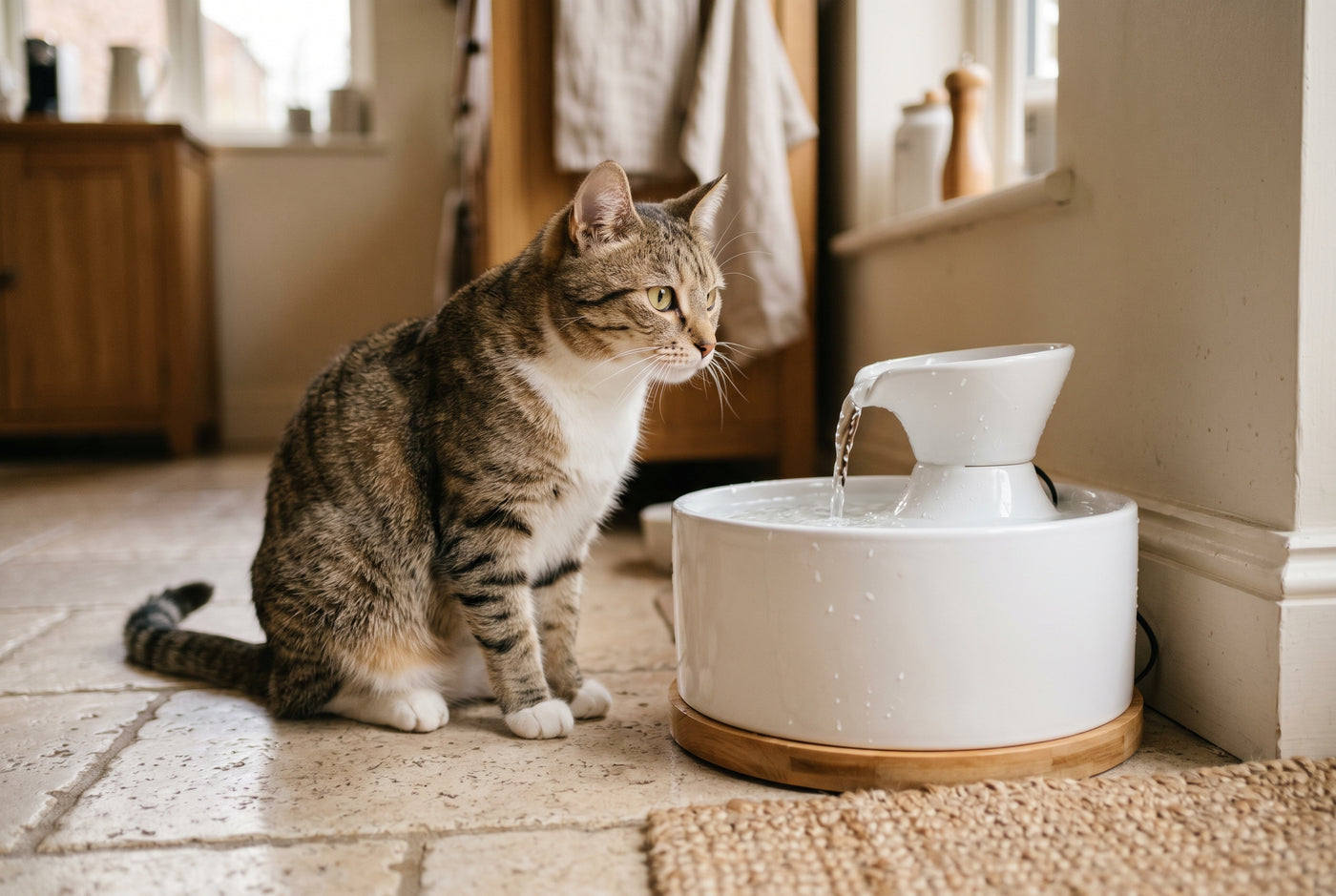
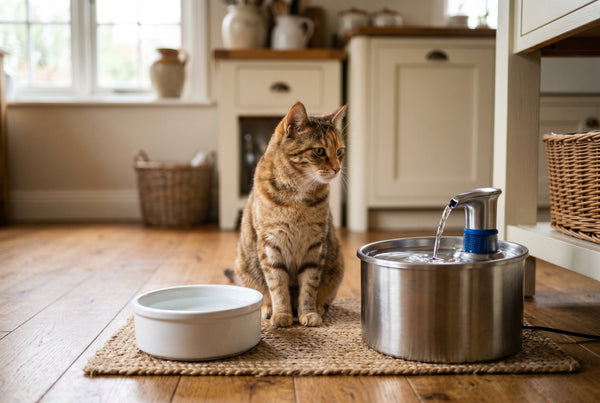
1. Give them moving water. This is the single biggest lever. Many cats instinctively prefer water that moves, because in nature still water can mean stagnant water. A recirculating fountain keeps the surface fresh and interesting, and a lot of picky drinkers who ignore a bowl will happily drink from a fountain.
2. Move the bowl away from the food. Cats often avoid drinking right next to their meals, another instinct left over from the wild, where water near a kill could be contaminated. Place at least one water station in a separate, calm spot.
3. Offer more than one station. One bowl in one room is easy to forget. Two or three shallow bowls around the house, especially on the levels where your cat spends time, gently raise the odds they drink.
4. Use a wide, shallow bowl. When a narrow bowl brushes a cat's whiskers, it creates a small stress called whisker fatigue that makes some cats back off. A wide bowl or a fountain basin solves it.
5. Add moisture to the diet. Mixing in wet food, or stirring a spoon of water or low sodium broth into meals, pulls hydration in through food. For many cats this quietly doubles daily intake.
6. Keep it clean. Cats have a sharper sense of smell than we do and will refuse water that tastes of old bowl film. Rinse and refill daily, and wash the bowl or fountain thoroughly every few days.
Give it a week
Change one or two things and watch for a few days before adding more. Most cats settle into a new setup within a week, and you will usually notice more frequent trips to drink and firmer, more regular litter box habits. If your cat suddenly drinks a lot more than usual, that is worth a vet visit too, since a spike in thirst can signal its own issues.
If a fountain sounds like the right first step, our cat collection has quiet, filtered options built for exactly this. Small change, healthier cat.
More from Wrenwood Notes

Join the Pack
Get 10% off your first order, plus care tips and early access to new arrivals.
Get 10% off